

Budget Breakdown: 22-Year-Old Client Experience Analyst Making $56,480 in La Crosse, WI
How a 22-year-old can max their Roth IRA, start savings towards long-term goals, and accelerate early retirement

Today I am budgeting for a 22-year-old Client Experience Analyst living in La Crosse, Wisconsin with their spouse (they budget separately for now, so we are looking at only their numbers). They work remotely earning a base salary of $51,480/year plus a quarterly bonus totaling about $5,000/year.

Their top financial goals are:
Max their Roth IRA
Save up for a house down payment
Figure out where their money is going and manage it better
Let’s take a look!
💸 Want a chance to be featured in a future Budget Breakdown? Submissions are available to paid subscribers.
Current Budget
Income
Their take-home varies based on overtime, landing between $2,400 and $2,800 a month, so we are using $2,600/month as our working number.
Retirement
They currently have about $10,000 invested for retirement.
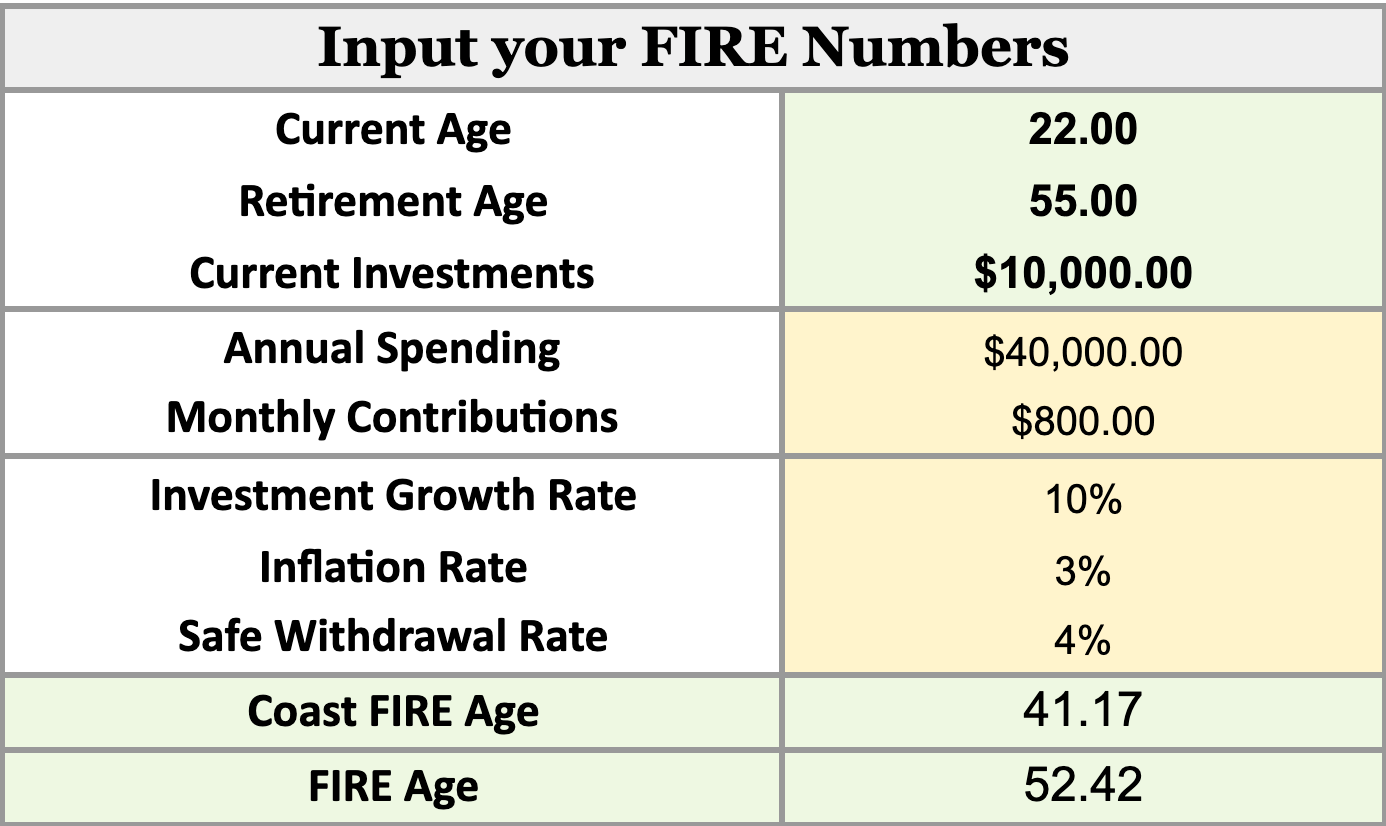
Each month they put $600 into their employer 401(k), plus $200 into their Roth IRA. That is $800/month going towards retirement.
Their goal is to retire between 50 and 55 with about 80% of their current salary, $40,000/year, in spending. Here is the exciting part: at their current pace, they can hit Coast FIRE to retire at 55 by age 41! That’s the power of investing early!
Budget
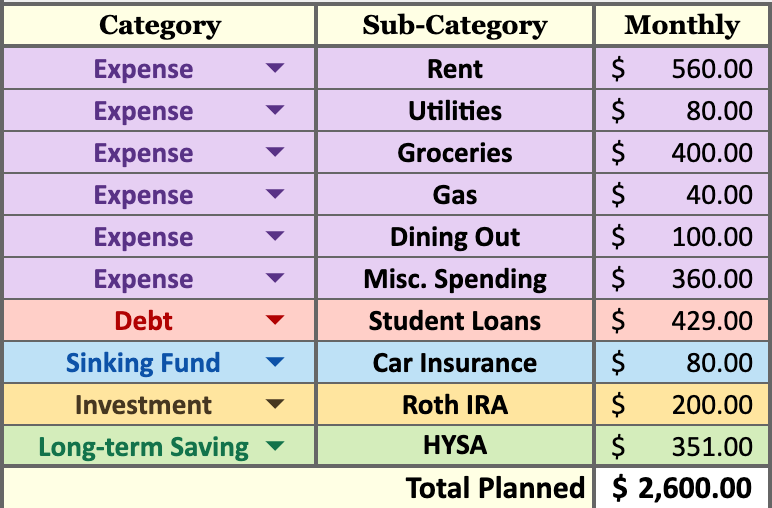
Their largest expense is rent at $560/month (which is their half). Utilities run $80, groceries and household $400, gas just $40 (remote work perk), and dining out about $100. Fixed expenses are well under 30% of take-home!
They run groceries, gas, dining, and daily spending through a credit card carrying a balance of $800-$900, but they pay it in full every month. That is not debt, just their spending method (and a smart one to earn points as long as they keep paying it off in full).
They only debt they are carrying are student loans:
Sallie Mae student loans: $26,166 at ~3.81%
Federal student loan: $3,790 at ~3.6%
The 3 Key Changes I Recommend
1. Increase Roth IRA contributions
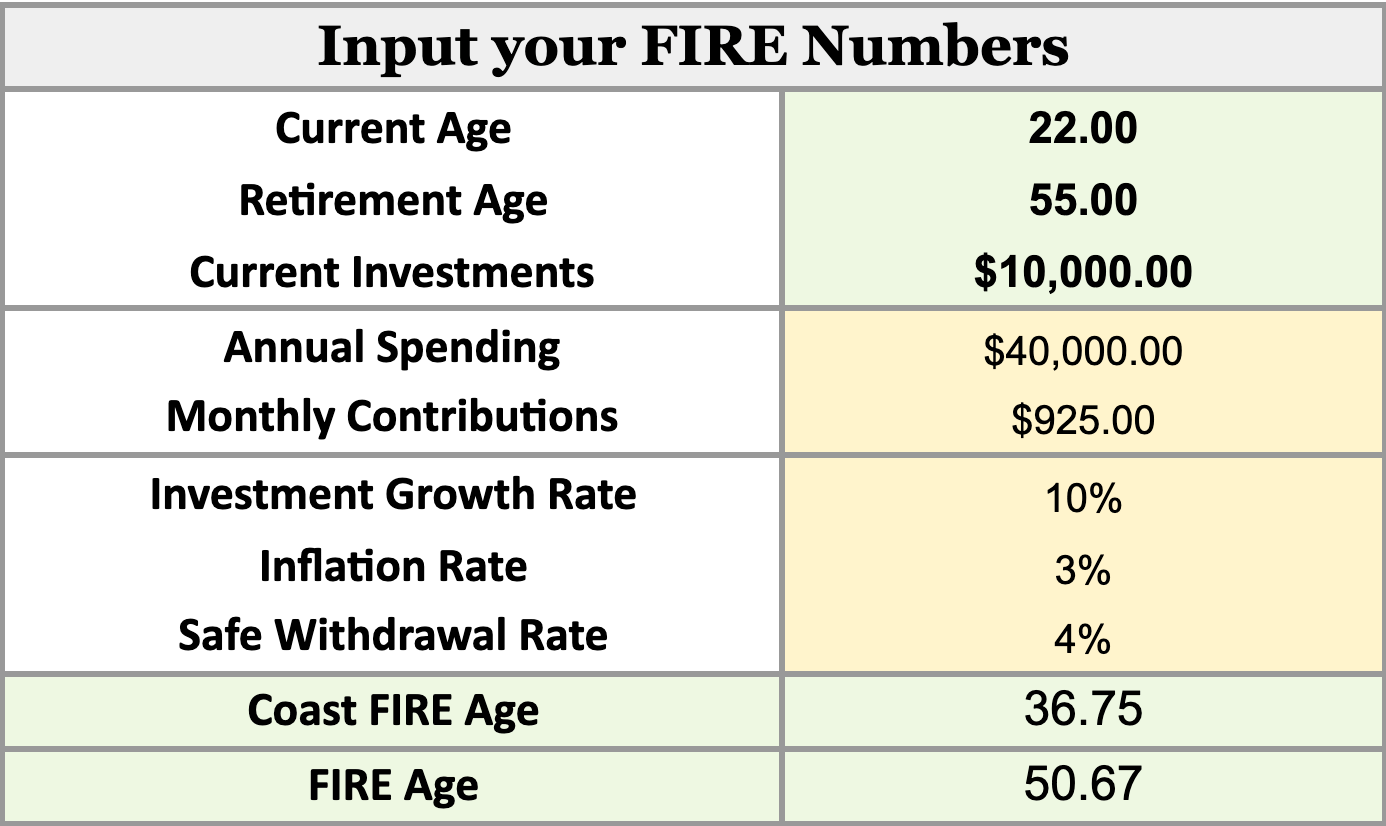
Their minimum student loan payments are $304, but they pay $429 every month. With their loans under 4%, I would feel comfortable shifting this to investing. That’s an extra $125 to the Roth IRA without touching their other buckets! They want to max this out, but with their goal to buy a house I want to create some room. That brings them to a retirement age ~50.
2. Start saving towards a Down Payment
One of their other top goals is a house down payment. My suggestion would be to put $250/mo in a taxable brokerage account (assuming this is 5+ years away). This can double as a down payment fund in the future, and also an early retirement bridge account if they choose not to purchase.
It’s important for them to fully understand the costs that go into home ownership (home maintenance, closing costs, utilities, etc). I would run a Rent vs Buy calculation — only paying $560 is so incredibly affordable I would take advantage of that as long as possible.
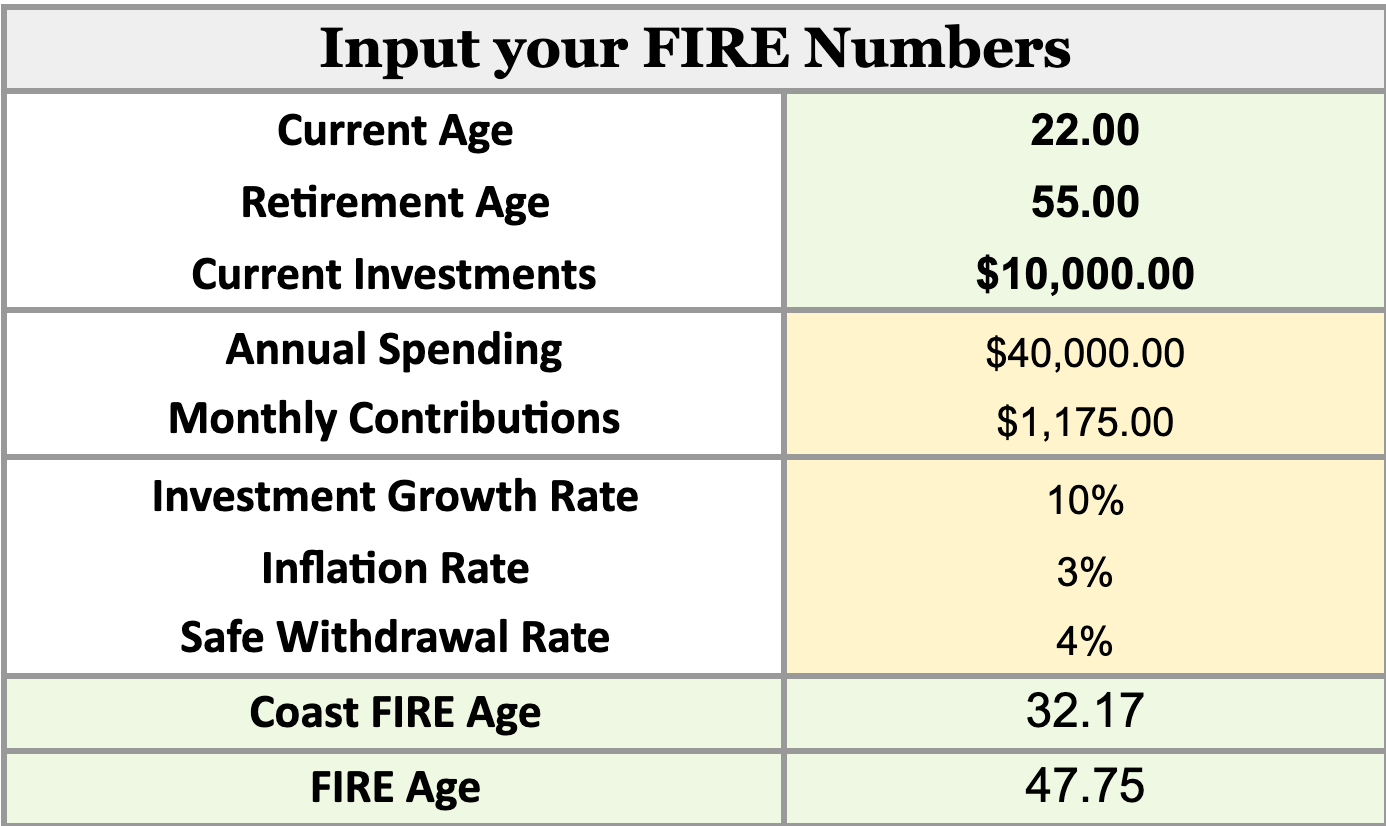
(Just for fun, if they ended up putting this money into their Roth IRA, that would move up their retirement date by another 3 years!!)
3. Give every dollar a job
The most important piece of this plan, is making sure they are actually sticking to the plan. This means knowing where their money is going and creating their goals. My Annual Budget Planner is built exactly for this. Giving every dollar a job and tracking where your money goes helps you stay accountable and aware of your finances.
If they find that they have extra money leftover at the end of the month they could choose to put that towards their Roth IRA, for example, until they are able to max it out over time! It’s all about seeing what you’re spending your money on, making sure it’s going to places you truly value, and funding your future.
Updated Budget
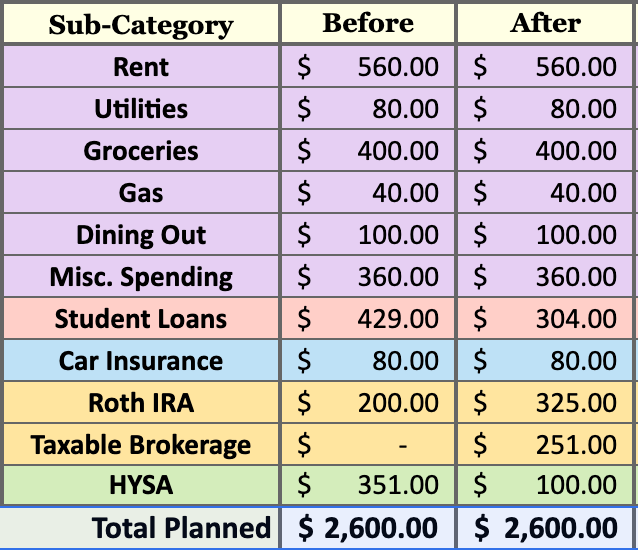
I kept some of their savings here because they don’t mention whether they have a fully funded emergency fund or not. This is part of building out their plan and understanding all of their goals. They can always shift back that taxable brokerage money to their HYSA temporarily, if needed.
At only 22 they have a much better grasp of their finances than 90% of their peers, so it’s only up from here!
Want to map out your own plan?
Friendly neighborhood disclaimer: I am not a licensed financial professional and this is not financial advice. These are the changes I would personally make based on assumptions and the limited data I have received. Please do your own research and work with a professional for your unique situation.